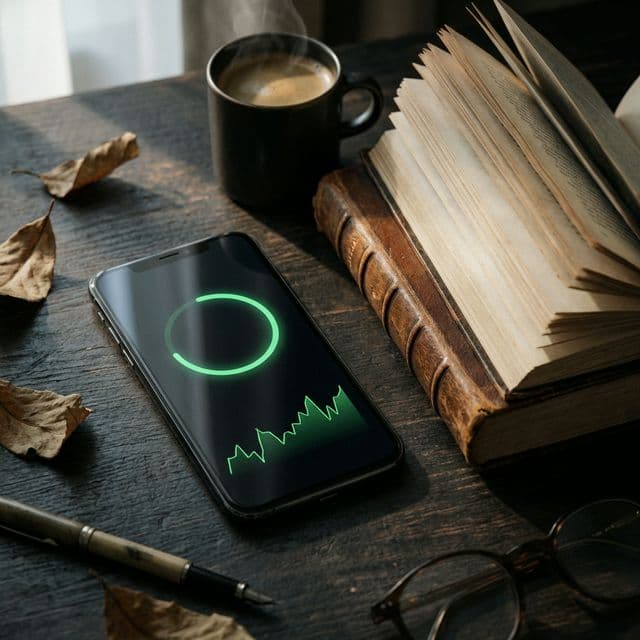
Every year, millions of readers set a book goal. Many of them pick a number at random (12 books, 24 books, 52 books) and dive in with enthusiasm. By spring, the goal has become background noise. By summer, it’s quietly forgotten.
The problem isn’t commitment. It’s the way the goal is set and tracked. A number without a system is just a wish. Here’s how to build a reading goal that actually works.
Setting a goal you’ll actually hit
The most common goal-setting mistake is picking an aspirational number with no basis in reality. Before you decide how many books you want to read this year, it helps to understand how many you’ve actually been reading.
If you finished eight books last year and you’re aiming for 30, you’re setting yourself up for a goal that feels impossible by March. A better approach: take your recent average and add 20–30%. It’s ambitious enough to be motivating, realistic enough to be achievable.
If you don’t know how many books you read last year, that’s okay, most people don’t. But it’s a good argument for starting to track your reading now, so next year you’ll have real data to work from.
Books vs. pages: which should you track?
Most reading challenges track books, but pages can be a more honest measure of how much you’re actually reading. A month where you read one 700-page novel looks the same as a month where you read one 200-page novella if you only count books.
The best approach is to track both. Set your yearly goal in books, but monitor your pages per day to understand your actual reading pace. This gives you a richer picture, and helps you know when a slower month is just because you’re reading something long, not because you’ve fallen off the wagon.
How to actually track your progress
A goal without visible progress is easy to forget. The key is making your progress trackable in a way that’s quick enough that you’ll actually do it. If updating your progress takes more than 30 seconds, most readers will stop doing it within a week.
Log every reading session, not just finished books
The most motivating type of progress tracking is granular: logging every reading session, not just marking books as finished. Seeing that you read 35 pages today, and that you’ve read 8 out of the past 10 days, is far more engaging than a counter that only moves when you finish a book.
With ReadBrew, you log your current page (or the number of pages you read, or a percentage) each time you close your book. The app does the rest: calculating your progress, updating your streaks, and showing how your pace today compares to your yearly goal.
Pace tracking: the missing piece
The most useful thing a reading tracker can tell you isn’t how many books you’ve finished. It’s whether you’re on track to reach your goal at your current pace.
If your goal is 24 books and you’re in May with only 6 finished, pace tracking tells you: at your current speed, you’ll end the year with around 14 books. That’s useful information. It gives you time to adjust: either by reading a bit more each day, or by revising your goal to something achievable.
ReadBrew shows your yearly goal progress with a real-time indicator: you’re ahead, on track, or behind. It sounds small, but that single signal changes how you think about your reading day-to-day.
Tracking goals without burning out
There’s a failure mode that comes with reading goals: they start to make reading feel like work. You’re behind pace, so you start rushing through books you’d normally enjoy slowly. You choose shorter books to hit your number faster. Reading stops being pleasurable and starts feeling like a quota.
Ways to avoid that trap:
Treat the goal as a guide, not a judge
Your reading goal should serve you, not the other way around. If life gets busy for a month and you fall behind, adjust the goal rather than abandoning it entirely or grinding through books to catch up. A revised goal that you’ll actually achieve is better than a rigid goal you’ll eventually give up on.
Don’t optimize for book count
If you notice yourself picking shorter books just to hit your number, step back. The goal of a reading challenge is to read more, not to read faster or shorter. Some of the best books you’ll ever read are long ones. Don’t let a yearly number steer you away from them.
Celebrate small milestones along the way
Don’t wait until December 31st to feel good about your reading. Find reasons to celebrate throughout the year: finishing a long book, hitting a streak milestone, reading every day for a month. These small wins keep the habit rewarding in the short term, which is what makes it stick long term.
Choosing how to track
There’s no single right way to track reading goals. Here are the most common approaches and when each one makes sense:
A reading app
Most readers, especially if you want automatic pace calculations, streak tracking, and stats all in one place. The low friction of logging from your phone makes it sustainable.
A paper journal
Readers who love the ritual of writing. It’s tactile and satisfying, but won’t give you pace data or statistics.
A spreadsheet
Data-oriented readers who want full control over their metrics. High setup time, high flexibility.
A physical book list
Minimalists who just want a simple record of what they’ve read. No pace tracking, but zero friction.
Keep the tracking light
The best reading goal is one that challenges you without overwhelming you, and the best tracking system is one that takes so little effort you actually keep doing it. Start with a realistic number, log your progress daily, pay attention to your pace, and adjust when life gets in the way. Reading is a pleasure. Keep the tracking light enough that it stays that way.
Set your reading goal and start tracking
ReadBrew shows your yearly goal, pace, and daily progress in one app. Free to download.
Free to download · No account required